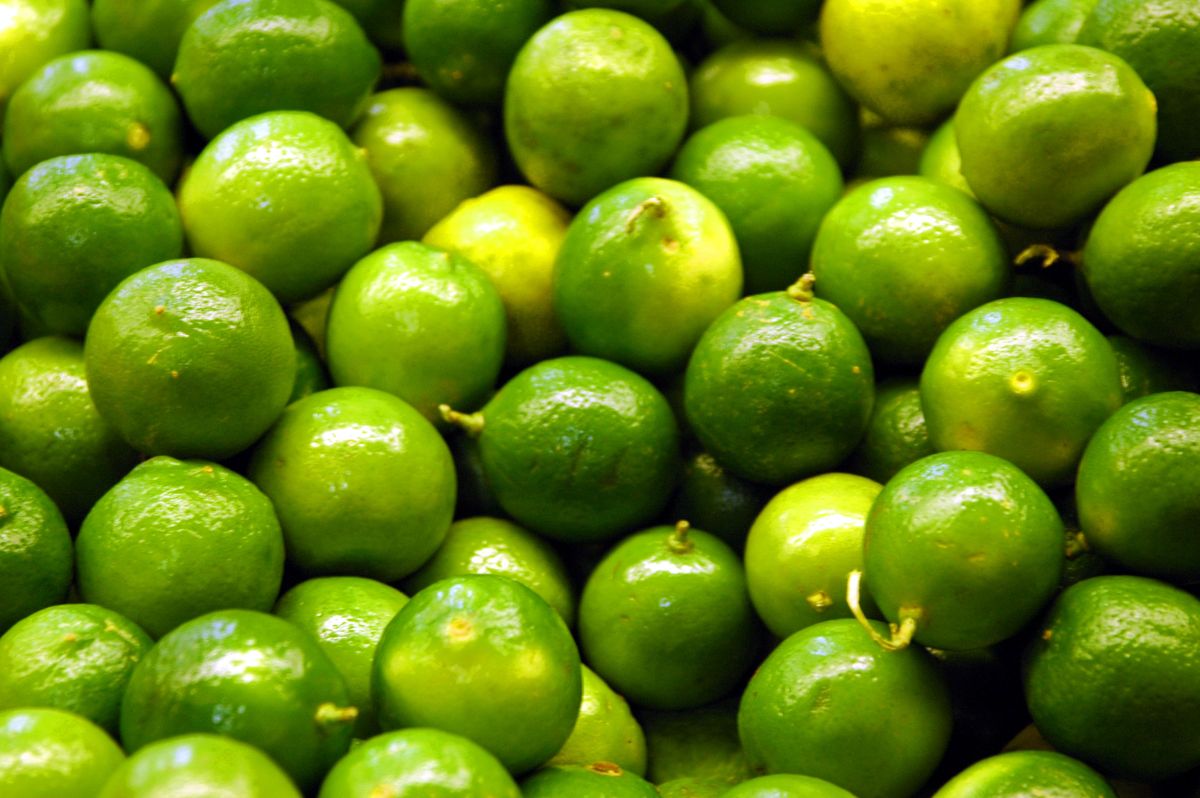
Tangerine – Citrus reticulata
Their height reaches 2-3m. The leaves are dark green and rather small. Fruits are round bright orange, sweet, up to 6-8cm in diameter. The differ hugely depending on the sort. Tangerines and grapefruits grow in diameter twice a year, in the spring time and in the middle of August, but bloom just once, in the spring. The fruits mature for about 5-6 months. Tangerines are one of the most cold resistant among the citruses.
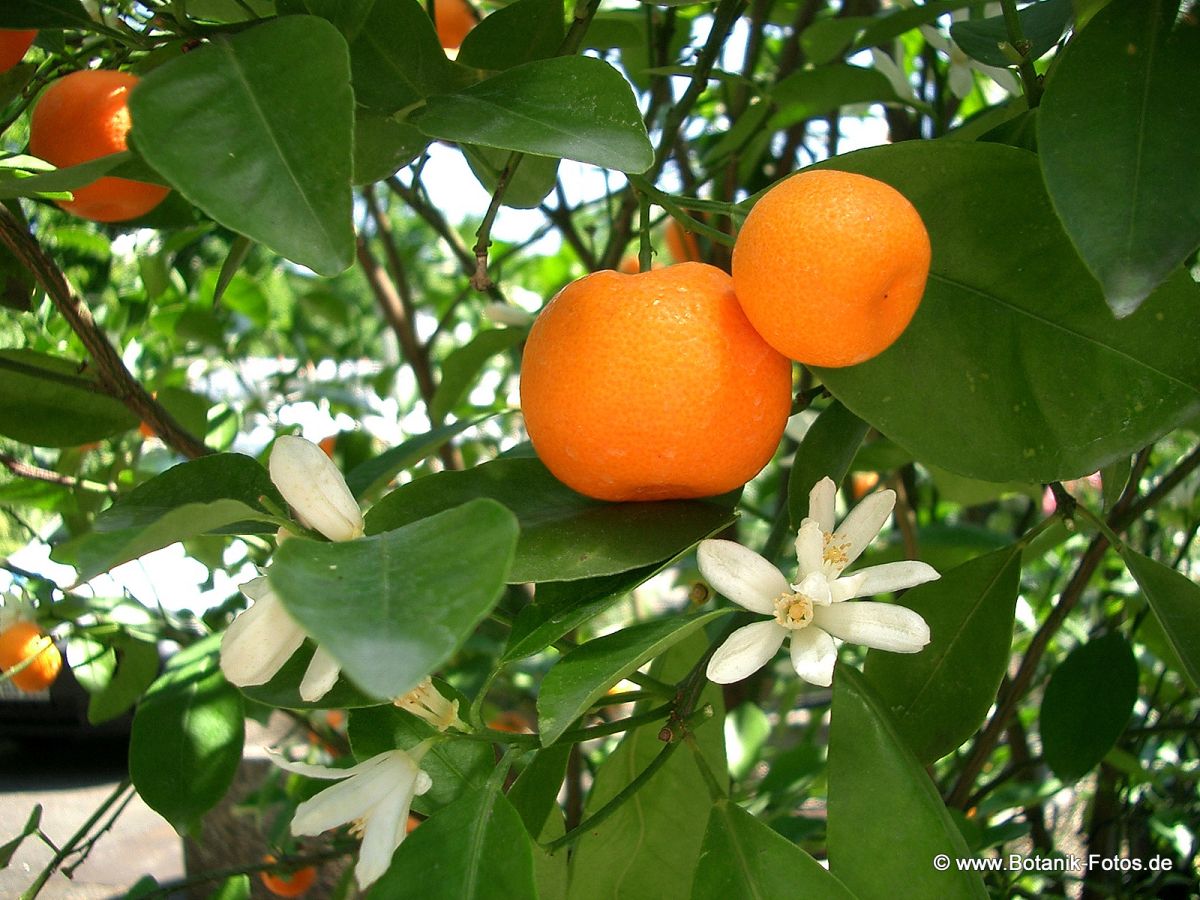
Clementine – Citrus clementina
This hybrid between a tangerine and a sour orange, created in 1902 by the french priest and selector Clément. It is grown mainly in the Mediterranean. The fruits look like a tangerine, but are brighter, with a green tint and significantly sweeter. Peeling it is harder than the tangerine.
Tangerine – Citrus tangerina
Some authors define this plant as a separate species, others count it for a tangerine. It can be said that they are a rather big bright orange tangerines with thinner peel and sweeter taste. Hybrids of tangerines with other citruses are known on the market as tangelo.
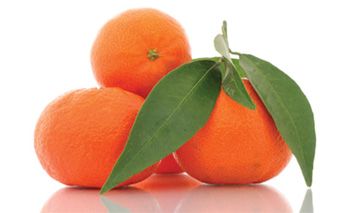
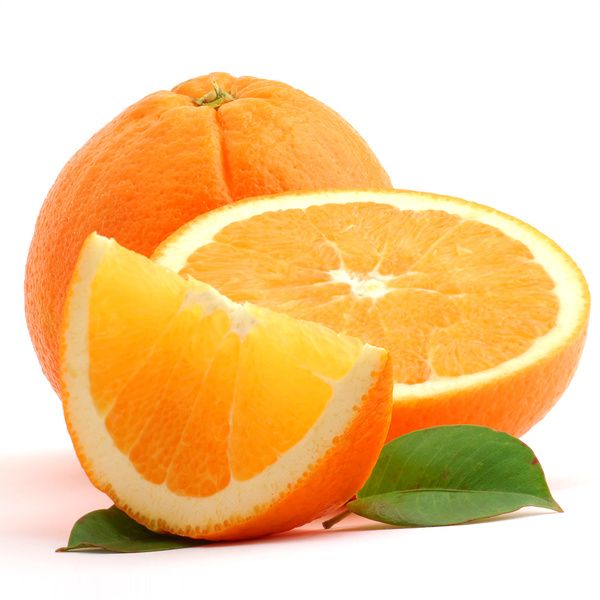
Sweet orange – Citrus sinensis
This is the species that is grown most. Biggest manufactures of oranges worldwide are in Brazil and USA. In the Mediterranean the red orange is grown more, its insides are orange-reddish tint.
Its height reaches 10-12m. Leaves are big and wide ovate. Thorns are characteristics that show up mostly at the bosom of the leaves. The fruits are round, about 10cm in diameter, yellow-orange and sweet.
Shape, size and taste can vary a lot depending of the sort. The orange grows three times a year, during spring, summer and autumn. The fruits mature in 8 months.
Kumquat, kinkan, Japanese kinkan – Fortunella japonica=Citrus japonica
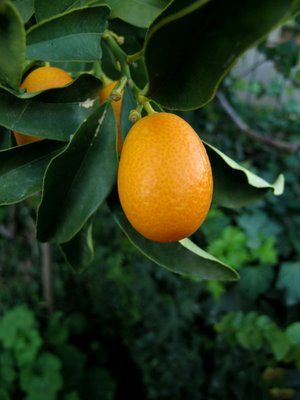
These are low trees or bigger bushes, not more than 2-2.5m in height with or without thorns. The leaves are 6-8cm long and dark green. The fruits are tiny, orange-yellowish, with oblong ovoid or pear shape. Their thin peel allows them to be consumed whole. They weight about 20-25gr. mature slow, almost half a year.
One of the main characteristic of the kumquat is that they have long period of rest that continues from the end of summer until March. That is why the plant gives a rather low growth.
One of the different types of Japanese kinkan is the oval kinkan otherwise known as “golden apple” – Fortunella margarita = Citrus margarita. Its height reaches just 1m. Its fruits are also that big but oval shaped, 3-4cm long and 2cm wide, they are eaten whole and are very sweet.
Pumpelmus, pomelo or peddler – Citrus grandis = C.maxima
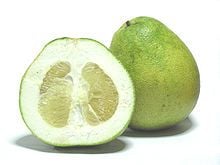
As the name suggests, it is one of the largest citruses and is not appropriate for growing indoor. It is named like the english captain, who first broguth it back to Europe from the Barbados islands. It is grown outdoors in tropical and subtropical countries because of its fruits, which in the last few years started coming to our markets as well. Its height reaches 10m. The leaves of the pomelo are also very big – up to 18-20cm long. The fruit has a round or pearlike shape and greatly resembles a grapefruit. It can reach up to 2.5kg. Its peel is thicker than that of the grapefruit – 3cm.
Sour orange – Citrus aurantium = C.Bigarradia
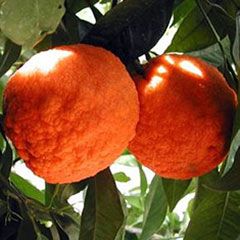
This is not an indoor plant, however it is widely spread as a decorative and industrial plant. It is also used as a rootstock for the reproduction of citrus by enrichment, as it has a very powerful and developed root system, highly resistant to diseases and unpretentious about soil. The stem is covered with sharp spikes. The fruits are round 6-7cm in diameter, orange-red and taste sour. They are not edible. In some countries, the flowers are used as traditional wedding decorations in some countries.
Lime – Citrus aurantifolia
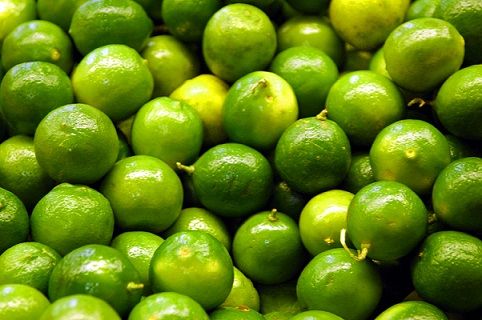
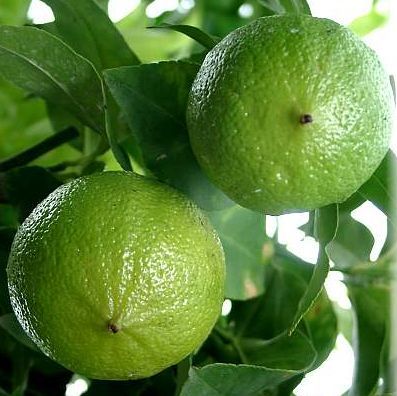
In Europe lime comes rather late, in the XVIII century. Brought by the arab merchants and english sailors, that use it to prevent scurvy. According to botanists, it is a species of lemon known as Citrus limon aurantifolia. It looks like a small tree or a bush, it reaches height of about 1.5-3.5-4m. The branches have small thorns. The fruits look like lemons, but smaller and with a thinner peel. They are oval shaped, dark green, seldom light green. Their juice is sour, with a specific aroma, stronger than that of the lemon.
Bergamot – Citrus bergamia
This is a hybrid between lemon and sour orange. it is grown mostly in tropical countries, as it is requires a lot of heat and moisture. It is a evergreen, it is slightly branched tree, its height is 2 to 4m. The branches are almost without thorns. Leaves are 6 to 14cm long. The fruits are seedless and have a bitter-sour taste. They are pear shaped, 6-7cm long and 5-6cm wide at the bottom, golden to lemon-yellow. Their skin is highly aromatic and the extracted essential oil is widely used in the perfumery and food industry. The bergamot blooms from March through April and the fruits mature in the end of Autumn.
Poncirus – Poncirus trifoliata
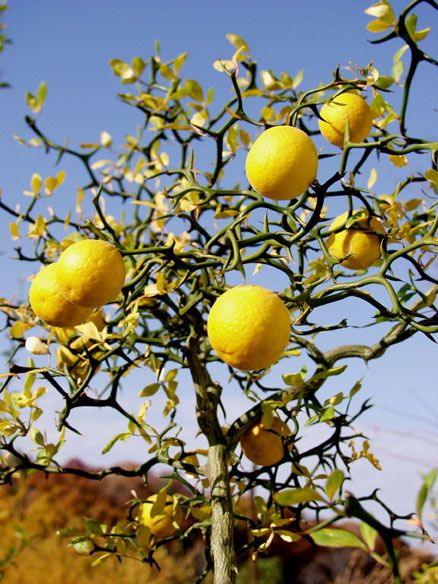
This is not a very wide spread sort, close to the species Citrus, it can only be found in botanical gardens and in the collections of exotic plants. It comes from northern China. It is a leafwood or bush, very thorny and with densely intertwined branches. The thorns are 8 to 10 cm long and very sharp. its hight can reach 5-6m. It blooms in May with whitish aromatic flowers. The fruits are tiny, round, pale green or yellowish-green to yellow, with a thin but sour peel and are not edible. They contain the poisonous glucoside penicardine. It is decorative, for hedges with seeds. Propagated this way, it blooms and bears fruit in its fifth – sixth year.
A garden in four seasons
Author : Katya Stoeva